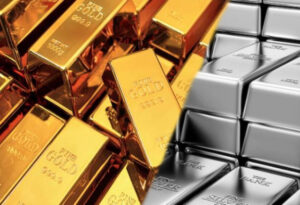


As of March 2, 2026, gold surged past $5,400 per ounce, smashing through previous highs and continuing its relentless climb. The catalyst? Confirmation over the weekend that Iran’s Supreme Leader, Ayatollah Ali Khamenei, was killed in the joint U.S.- Israeli strikes that began on February 28th.
Iranian state media verified the 86-year-old leader’s death, triggering 40 days of national mourning, the formation of an interim leadership council, and vows of severe retaliation from Tehran. Israel has already launched fresh waves of strikes on Tehran, while Iran has fired missile barrages in response, with reports of casualties on multiple sides, including U.S. service members.
This dramatic escalation has ignited unprecedented safe-haven buying, pushing gold higher by over $122 in early trading after markets opened. Expect an immediate surge. Gold can reach $6,000 – $7,000 in the coming months. The sky, quite literally, is the limit.
This War Will Send Gold Soaring
The killing of Iran’s supreme leader marks a seismic shift in the Middle East conflict:
Leadership vacuum and chaos: Khamenei’s death decapitates the Islamic Republic’s theocratic core after 36 years of iron rule. An interim council (including President Masoud Pezeshkian) has taken over, but uncertainty over succession, internal power struggles, and potential hardliner backlash creates extreme instability. This is classic fuel for gold rallies.
Escalation risks skyrocket: Iran has declared revenge a “legitimate right,” with missile exchanges already underway. Proxies like Hezbollah, Houthis, and Iraqi militias could activate fully, threatening oil routes, U.S. bases, and Israeli cities. Any closure threats to the Strait of Hormuz would spike energy prices, stoke global inflation, and drive central banks to lower interest rates – gold’s sweet spot.
Regime-change acceleration: President Trump has framed the operation as eliminating nuclear threats and pushing for broader regime change. With the symbolic head of the regime gone, markets are betting on prolonged turmoil, not quick resolution.
Geopolitical shocks of this magnitude have historically propelled gold: the 2003 Iraq invasion, the 2011 Libya intervention, and every major Middle East flare-up since. But this one feels different, deeper and more existential. The market reaction is already ferocious.
It’s about Defending the U.S. Dollar’s Reserve Status
Official rhetoric centers on nuclear prevention and “imminent threats,” but the pattern is unmistakable. This conflict is about crushing any serious challenge to the petrodollar system that has anchored U.S. financial hegemony for decades.
Countries that challenge the requirement to price and settle oil in U.S. dollars have faced extraordinary pressure. Economic, then military. Iran is the latest, but far from the first.
Iran, a key BRICS+ player, has long undermined dollar dominance by selling oil in yuan to China, trading in rubles with Russia, and building non-dollar payment networks. Eliminating Khamenei, the architect of Iran’s anti-Western axis, sends a brutal message to would-be challengers. Threaten the dollar’s oil monopoly, and face overwhelming force.
Striking Similarities with Past “Regime Change” Operations
Saddam Hussein and Iraq: In late 2000, Iraq began selling oil exclusively in euros under the UN Oil-for-Food program. The move earned Baghdad hundreds of millions in currency gains as the euro strengthened.
Less than three years later, the U.S. invaded under the guise of preventing the proliferation of weapons of mass destruction. After regime change, Iraqi oil sales swiftly reverted to dollars.
Muammar Gaddafi and Libya: Gaddafi, as African Union chairman, pushed aggressively for a gold-backed “African dinar” to replace the U.S. dollar in oil and trade across the continent. Libya held 143 tons of gold.
NATO’s 2011 intervention, framed as protecting civilians, ended with Gaddafi’s death. The gold-dinar project died with him. Leaked emails from the period explicitly reference Libya’s gold reserves and the currency plan as strategic concerns.
Nicolás Maduro and Venezuela: Venezuela under Maduro repeatedly tried to bypass the dollar: launching the petro crypto-token, selling oil to China and India in yuan or barter, and courting BRICS membership.
Heavy U.S. sanctions followed, culminating in January 2026 when U.S. forces captured Maduro on narco-terrorism charges. Within days, Washington began directing Venezuelan oil sales through U.S.-controlled accounts and re-denominating exports in dollars.
Iran mirrors them precisely: BRICS membership, de-dollarization efforts, sanctions-evasion webs. Khamenei’s killing advances the same goal of reimposing dollar primacy over global energy.
Gold Is the Ultimate Beneficiary
Every defense of the petrodollar through sanctions or military action has boosted gold. Central banks (China, Russia, others) hoard physical metal as a hedge against dollar weaponization. Private investors follow suit amid eroding fiat confidence.
With Khamenei dead, leadership fractured, retaliation underway, and oil markets on edge, gold’s momentum is unstoppable. Prices could easily test $6,000–$7,000 soon, or higher in a full regional war.
The pattern is repeating, confidence in paper currencies is fraying faster than ever, and gold stands alone as the asset no government can sanction, inflate away, or bomb. The sky truly is the limit. If you haven’t already positioned yourself in physical gold, or maximized your exposure, do it immediately.
Buy as much as you possibly can while the window remains open. The petrodollar may limp on, but each violent defense accelerates the shift to alternatives. Gold is money. It doesn’t need trust in Washington or any government. It simply exists.